
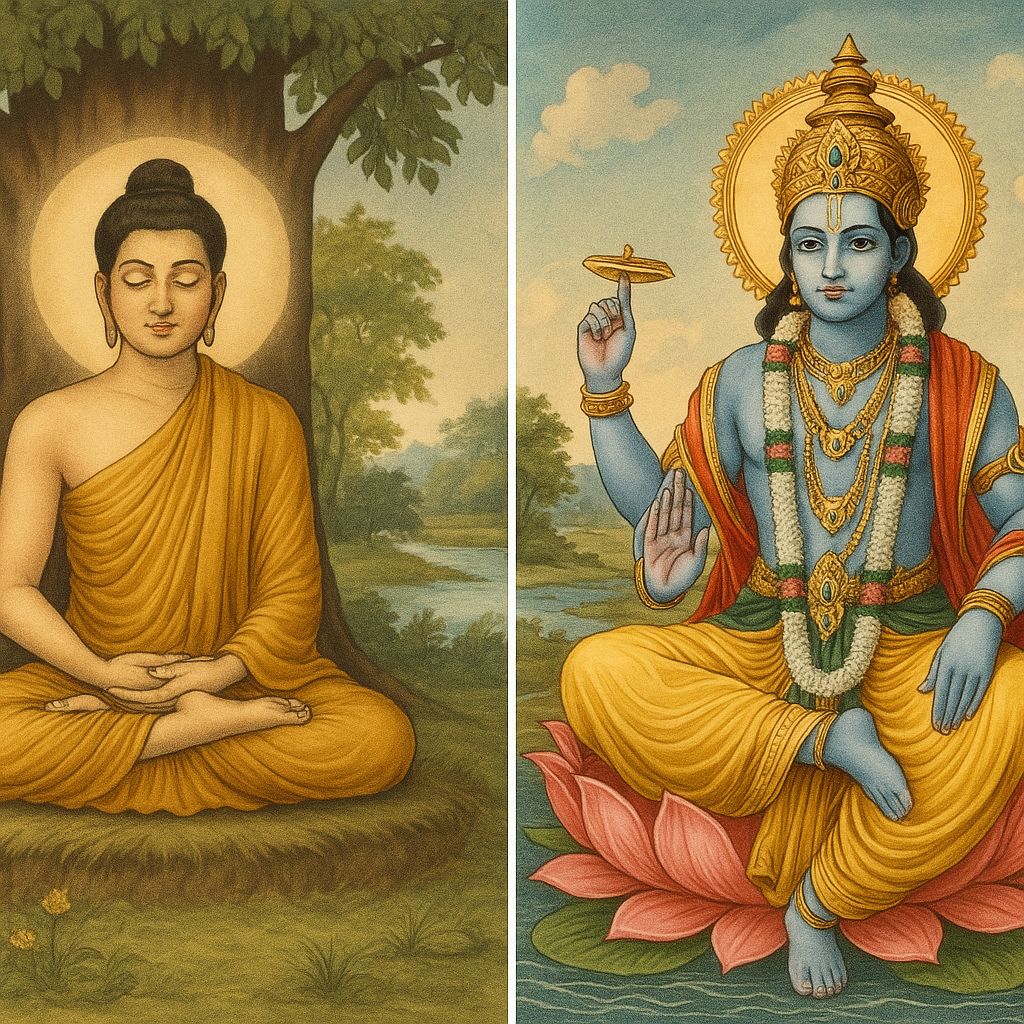
What Is the Difference Between Buddhism and Sanatan Dharma (Hinduism)?
India is the birthplace of many profound spiritual traditions. Two of the most influential among them are Sanatan Dharma (Hinduism) and Buddhism. At first glance, they may appear similar because both originated in India and share cultural roots, but they are quite different in their beliefs, philosophy, and practices. Understanding their differences helps us appreciate the depth and diversity of India’s spiritual heritage.
Buddhism — The Path to End Suffering
Buddhism was founded in the 6th century BCE by Gautama Buddha. Born as Prince Siddhartha, he renounced his royal life after witnessing the suffering of the world and set out to find the truth. After years of meditation, he attained enlightenment.
Buddhism does not believe in a supreme creator God. Buddha taught that desire (craving) is the root cause of all suffering, and when desire is eliminated, suffering ends. He laid out the Four Noble Truths and the Noble Eightfold Path as practical ways to overcome suffering.
Buddhism also teaches the doctrine of Anatta (No-Soul) — it does not believe in a permanent soul. Its focus is on mindfulness, compassion, ethical conduct, and the Middle Way (avoiding extremes). Buddhism rejects the caste system and believes in equality of all beings.
🕉 Sanatan Dharma — Faith in the Eternal Soul and the Divine
Sanatan Dharma (Hinduism) is one of the world’s oldest religions, rooted in the Vedic tradition. It has no single founder. It teaches that life is guided by the four Purusharthas — Dharma (duty), Artha (wealth), Kama (desire), and Moksha (liberation).
Sanatan Dharma believes in many gods and goddesses, but they are considered different forms of one Supreme Reality (Brahman). It teaches that the soul (Atman) is eternal and divine, and the ultimate goal of life is Moksha — liberation from the cycle of birth and death.
Its sacred texts include the Vedas, Upanishads, Bhagavad Gita, and Puranas. Hindu practice involves various rituals like worship, yajnas (fire rituals), festivals, and samskaras (sacraments). Traditionally, Sanatan Dharma also upheld the varna (caste) system.
Key Differences
| Point | Buddhism | Sanatan Dharma (Hinduism) |
|---|---|---|
| Origin | Founded by Gautama Buddha | Rooted in ancient Vedic tradition |
| Belief in God | No (non-theistic) | Yes (many gods, Brahman as supreme) |
| Belief in Soul | No permanent soul (Anatta) | Eternal soul (Atman) |
| Path to Liberation | Noble Eightfold Path | Knowledge, devotion, karma, yoga paths |
| Practices | Meditation, mindfulness | Worship, yajna, rituals, festivals |
| Caste System | Rejects caste system | Traditionally accepted caste system |
Both Buddhism and Sanatan Dharma guide human beings toward spiritual growth and inner peace, but their approaches are different. Buddhism emphasizes self-discipline, compassion, and meditation, while Sanatan Dharma emphasizes devotion to God, Vedic philosophy, and ritual practices. Their diversity reflects the rich and pluralistic nature of Indian civilization.
~Religion World Bureau
Editorial Review Note
Religion World is the country's only website that provides complete information on all religions. Religion World will always present information about all religions impartially. You can send us all kinds of information, news, updates, opinions, and suggestions at religionworldin@gmail.com.You can also follow us on X (Twitter), Facebook, and YouTube.